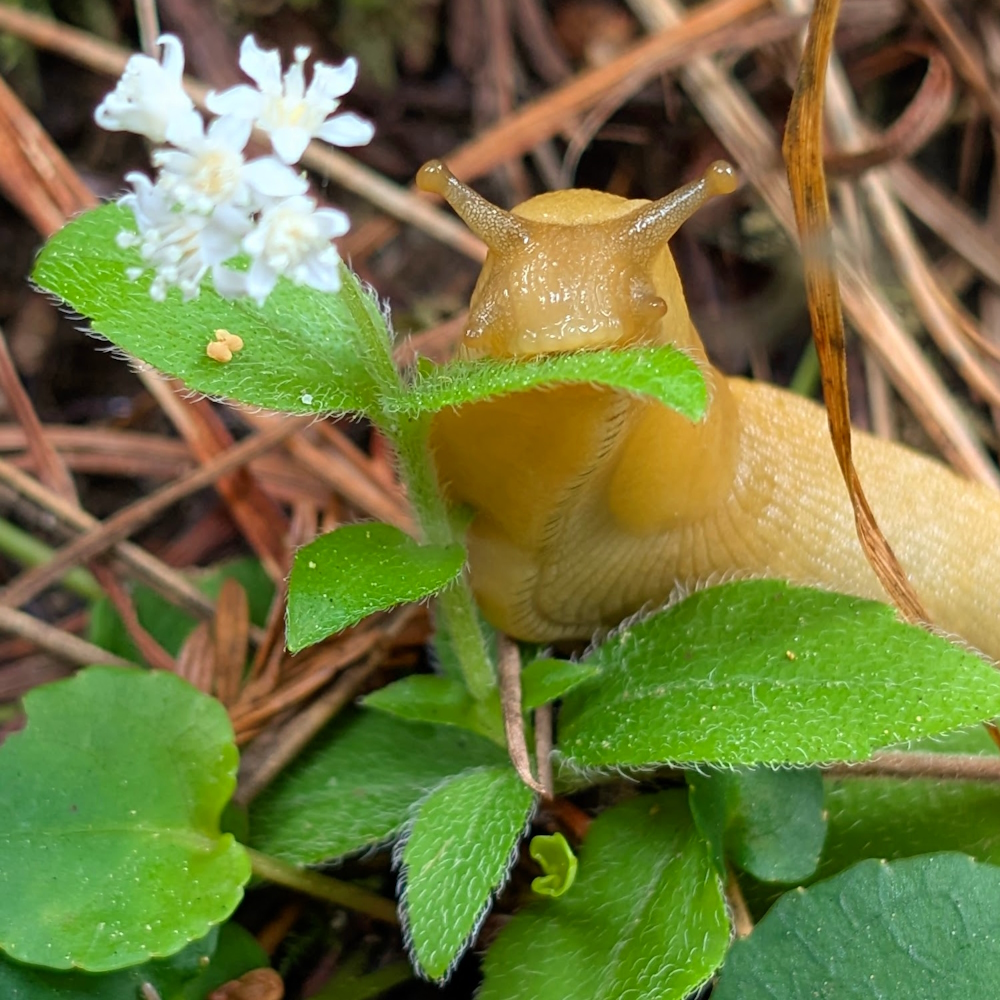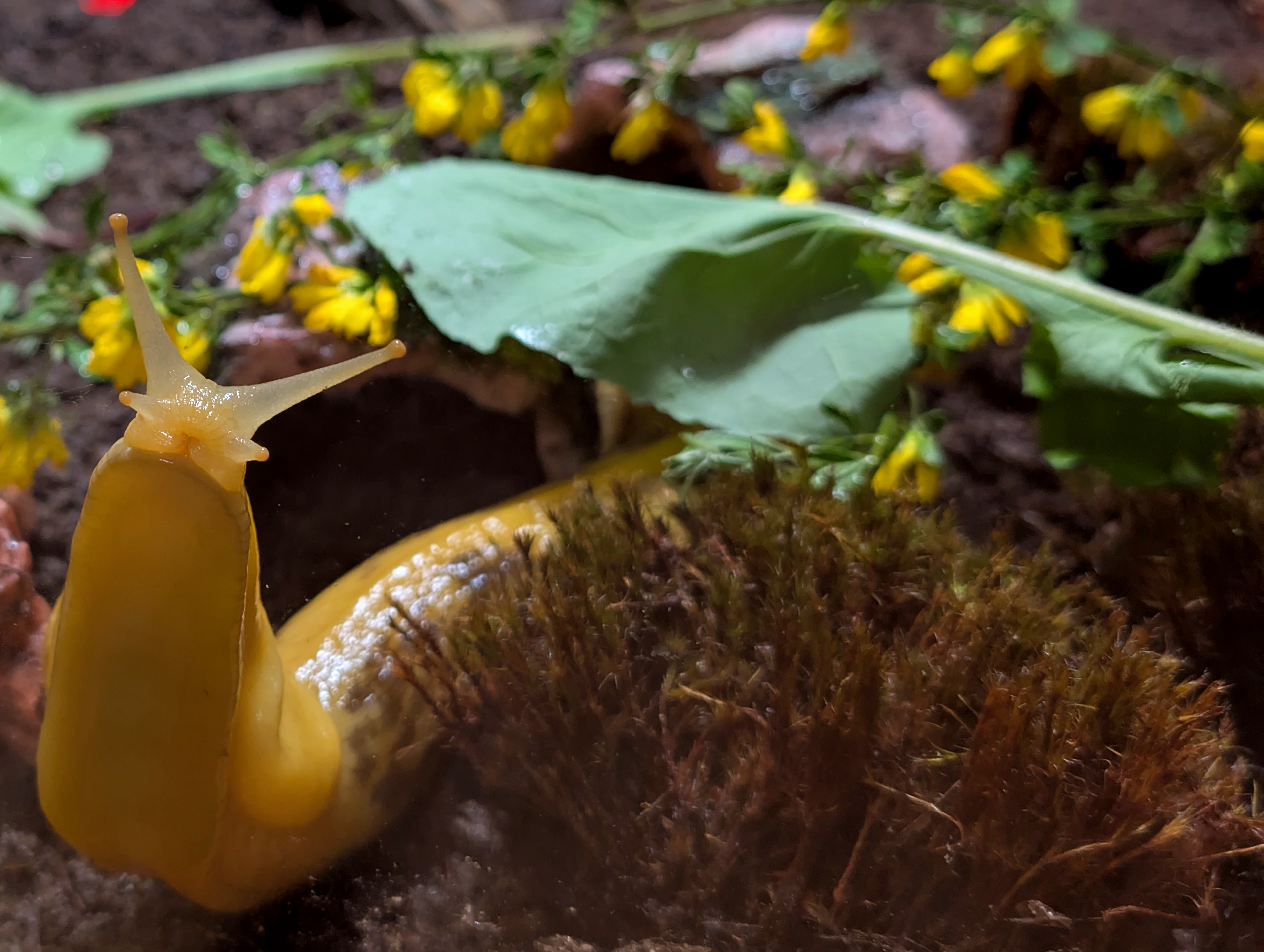
Despite their popularity, Banana Slugs (Ariolimax) aren't nearly as understood as many other gastropods — likely as their low temperature requirements and narrow distribution limit captive study.
Since 2022, I've observed Button's Banana Slugs (A. buttoni) almost daily along the Mendocino Coast, and in early '24 began caring for my first in captivity. While the following guide will focus on this experience and their nuances, it should at least loosely apply to any of the genus.
Notes
Based on Personal Observation
General Behavior
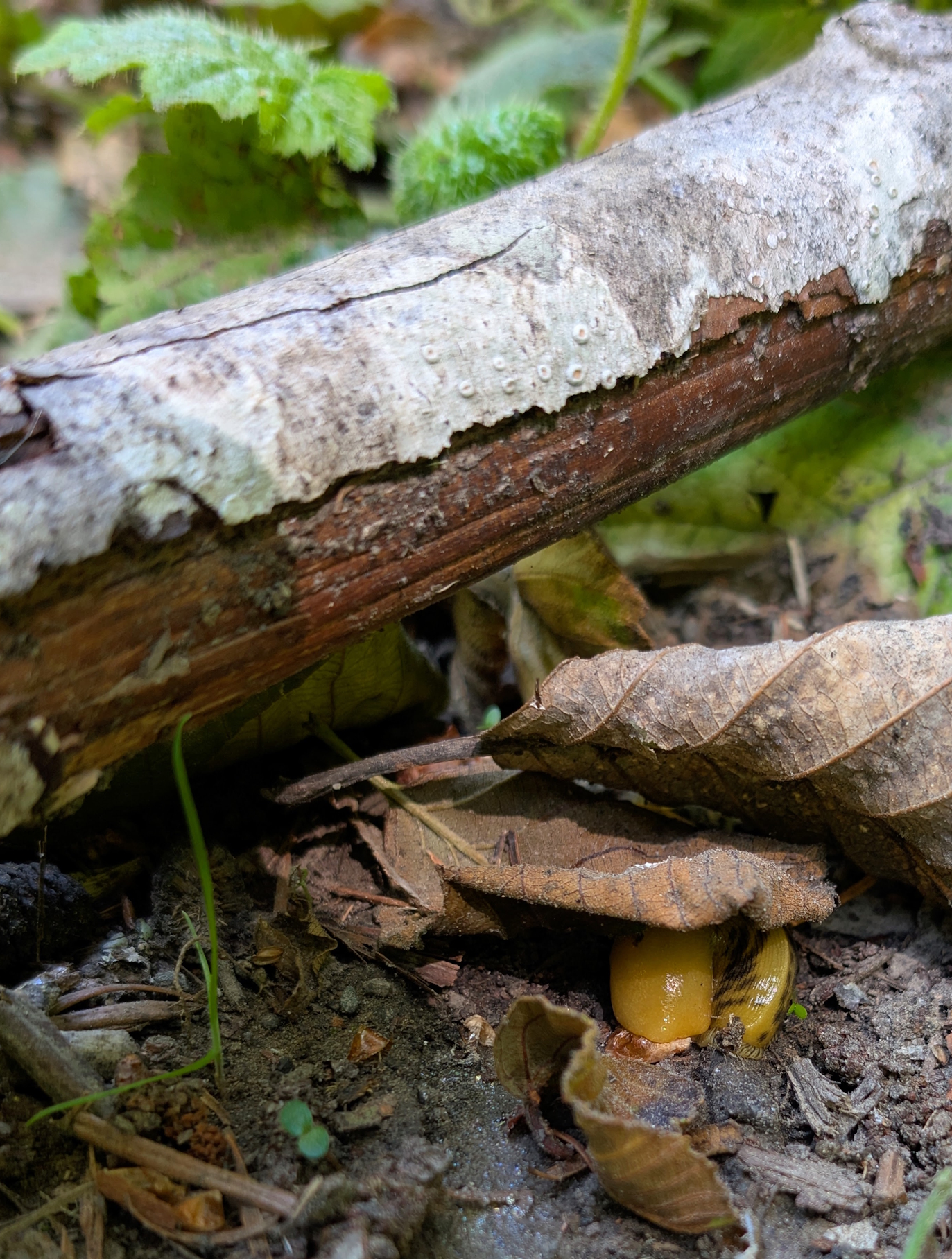
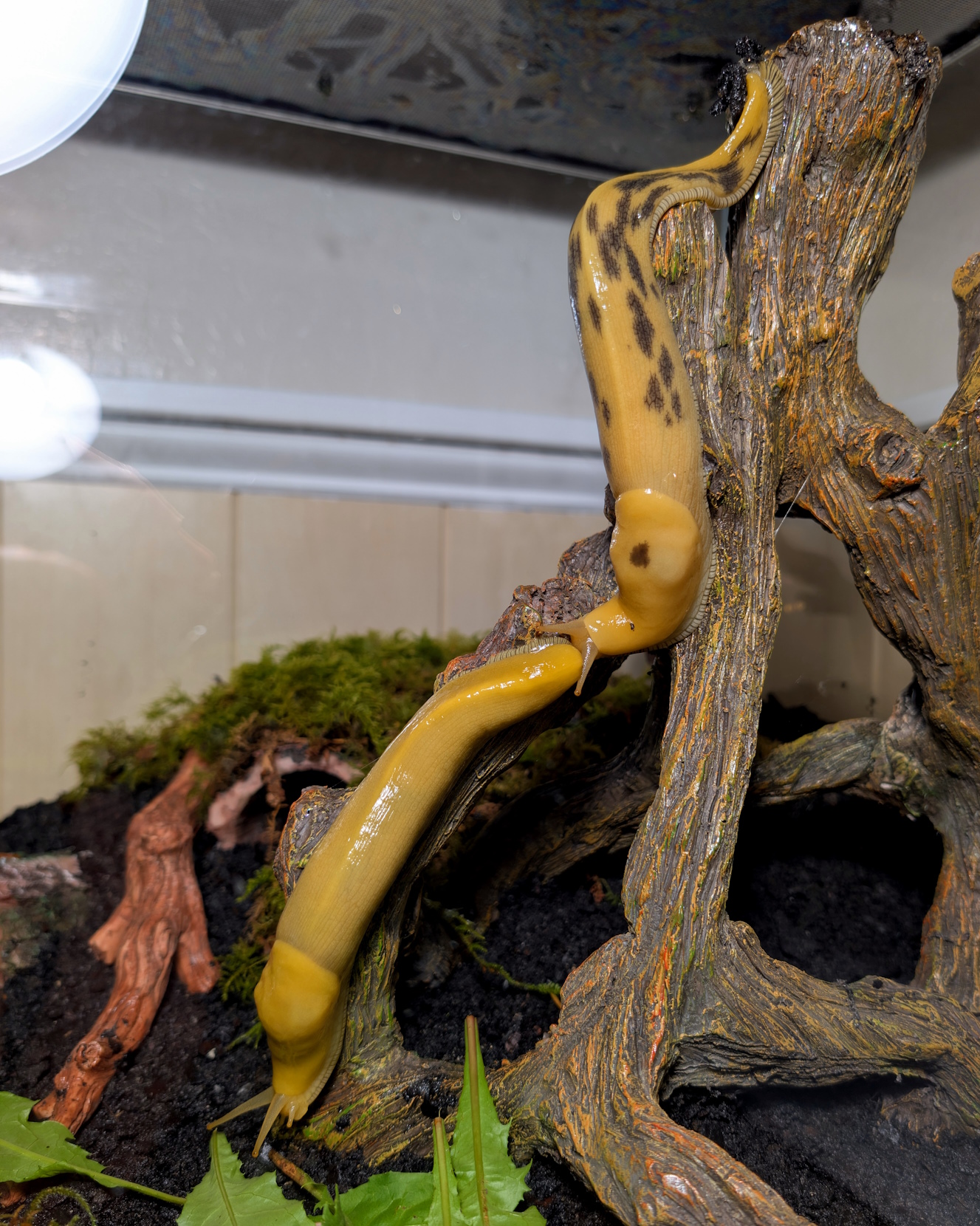
- When the risk of desiccation is low, they will split their daily rest between ground level and heights of ~5–15' (1.5–4.5m). While climbing is common amongst gastropods to avoid drowning when it rains, this behavior is routine for Banana Slugs — regardless of precipitation. The habit doesn't appear related to any external conditions, as individuals within the same environment are often dispersed between ground and elevated resting positions.
- Rests on the ground are often a home, and they will chase away those found occupying it. Homes may eventually be abandoned if either the climate or food availability degrades.
Climate Tolerance
- As ectotherms, temperatures have a direct impact on their metabolism, which in turn has a major impact on their rate of aging and activity. ~55°F (13°C) was found to correlate with their peak metabolic rate, as when maintained long-term, they mature the quickest and mate the most frequently.
- Without a moist surface, signs of stress appear below ~65% RH, as slime production sharply increases and activity diminishes.
Age Markers
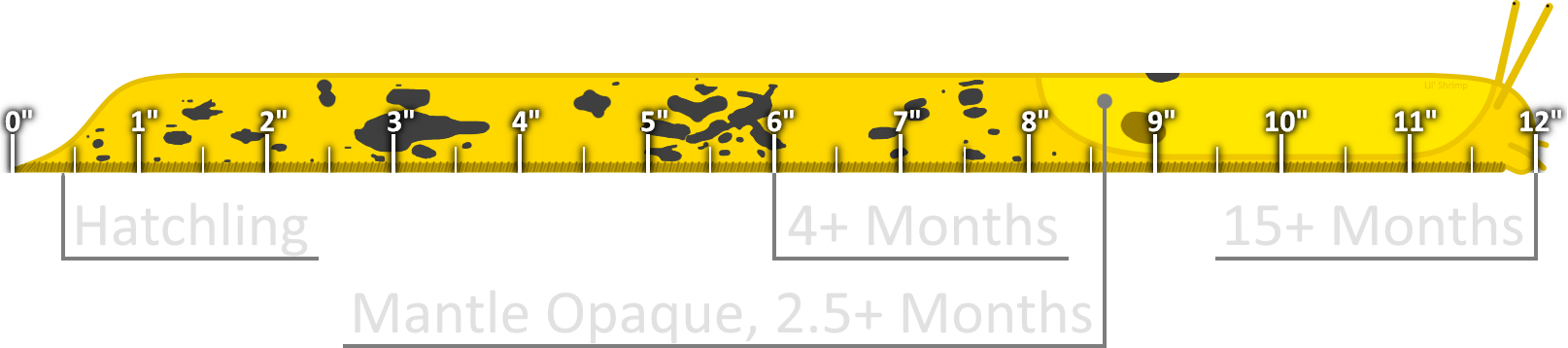
Reproduction in Captivity
Conditions are described in the section on Care.
- Sexual maturity is reached at ~5 months of age.
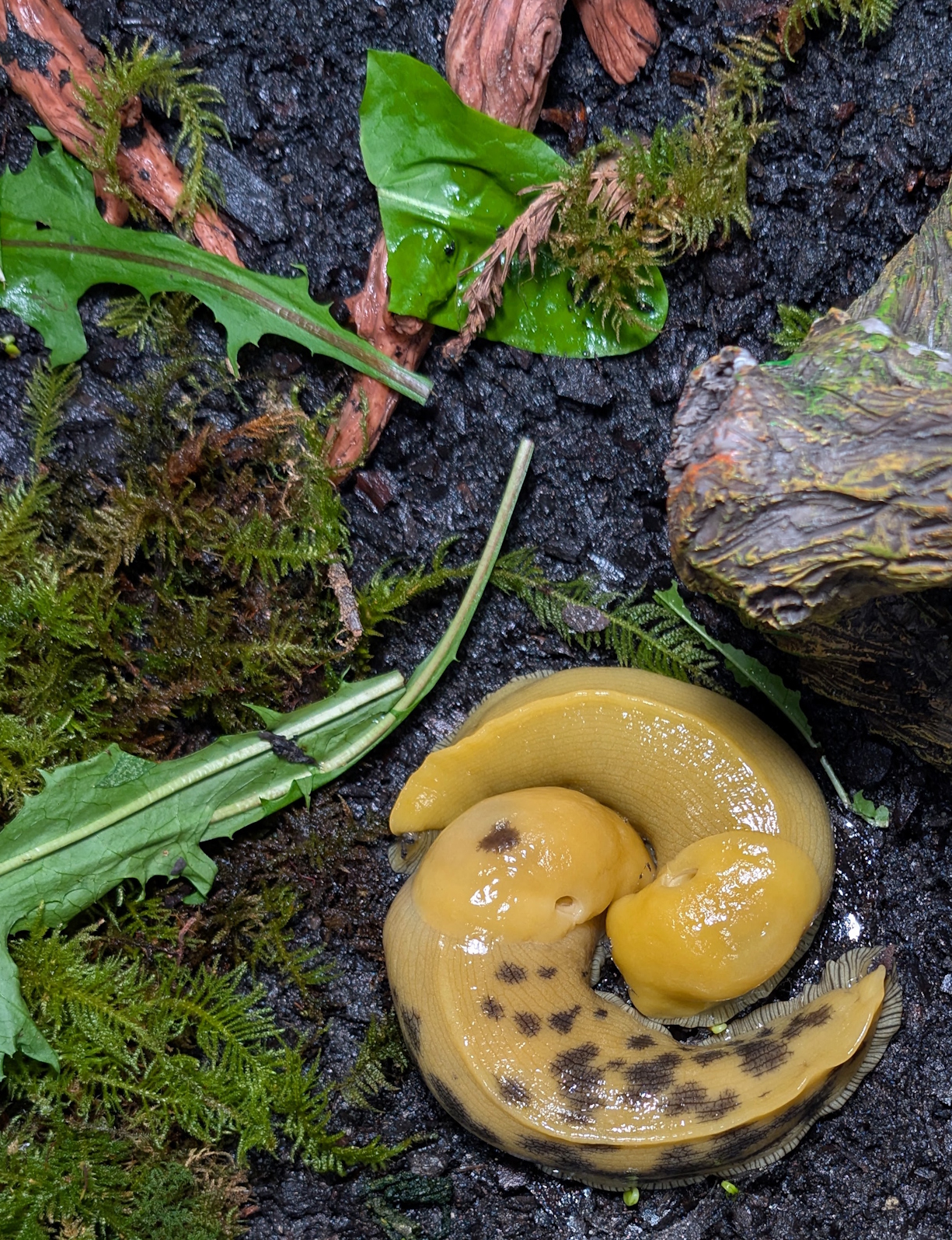
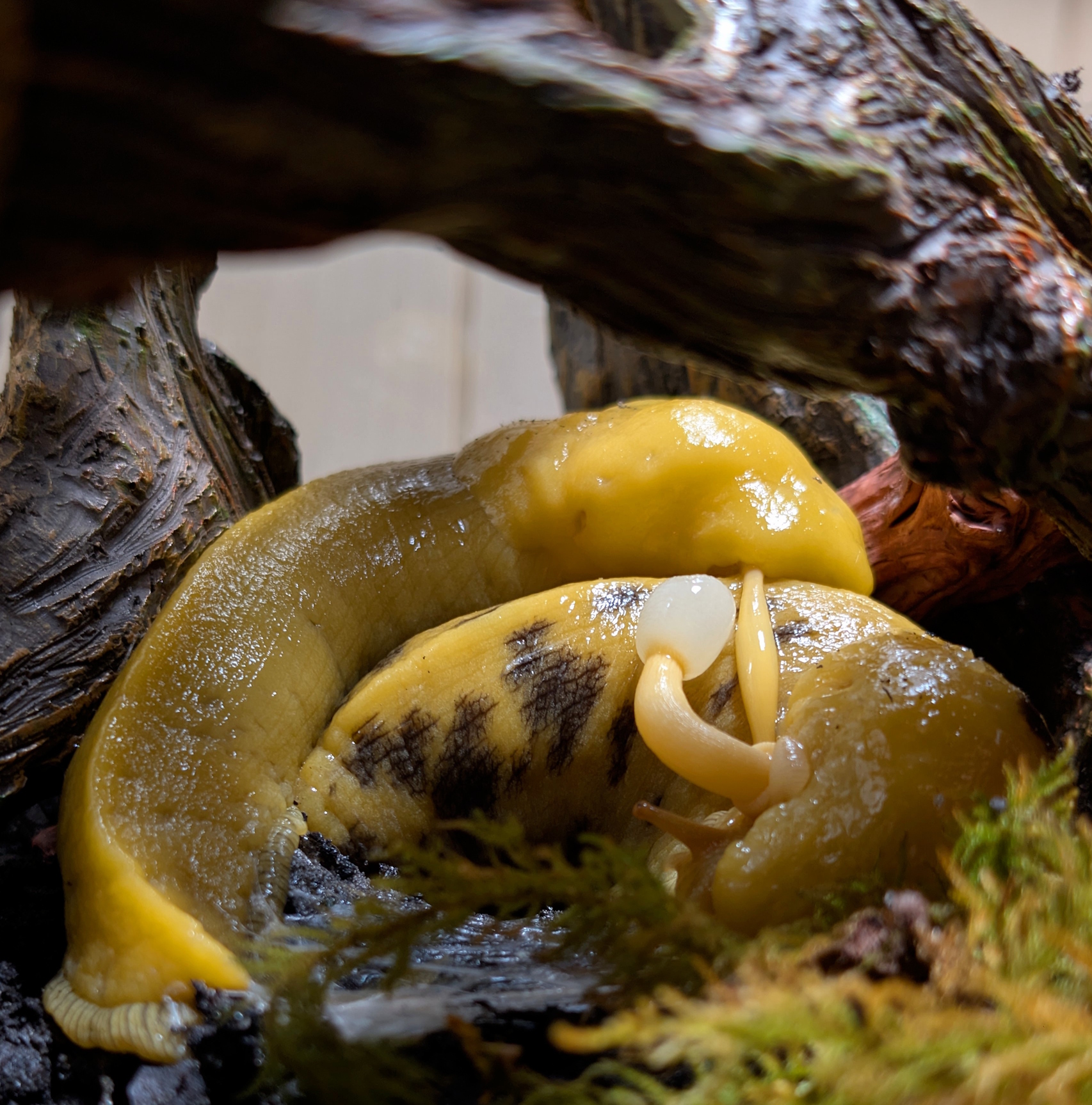
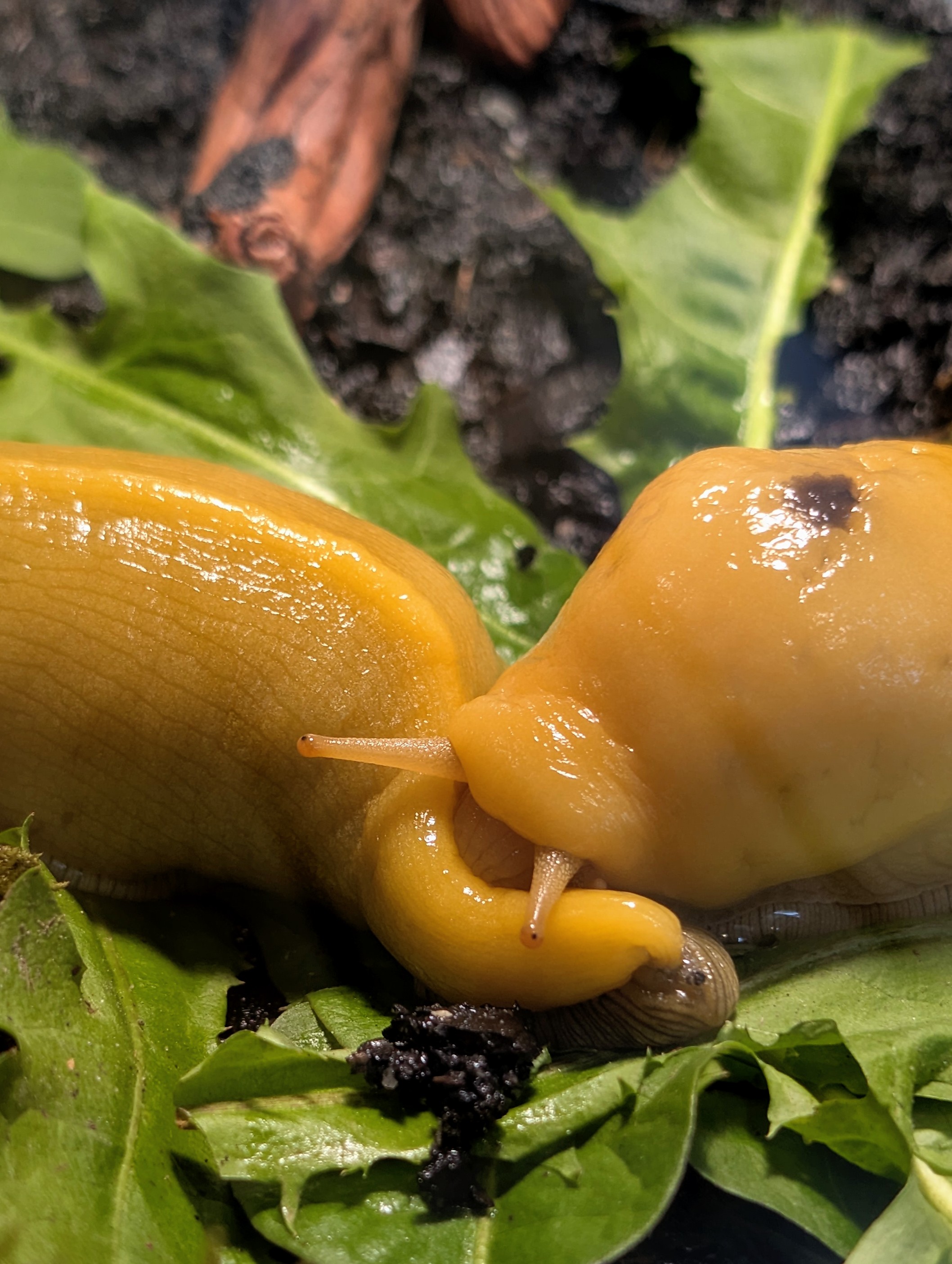
- Mature individuals tend to court any conspecifics they bump into — including hatchlings. This involves persistent nibbling, which typically leaves scars and may eventually result in fully-punctured skin. If reciprocated, they focus on their partner's right flank until their gonopores align — otherwise, a chase ensues until either reciprocation or lost contact. Fleeing doesn't necessarily mean disinterest, as the pursued will occasionally return to their pursuer upon separation — suggesting overstimulation. Successful courtships ranged from ~30 minutes to as long as ~3 hours, and will typically conclude in a Yin-Yang spiral.
- Mating begins shortly after gonopore alignment, and involves 12–24 hours of simultaneous penetration. This range was consistent across the climate's gradient.
- Beginning at ~5 months old, a single pair mated every 4–7 days over the course of 4 months — totaling 23 sessions before this tracking ended due to the trend's stability. However, this couple became much more sedentary at ~12 months of age, which resulted in fewer encounters and prompted tracking to resume at ~13 months of age. They were then found to be mating every 6–12 days over the course of 2 months — totaling 7 sessions.
- No signs of apophallation were ever found, as all observed matings involved two penises.
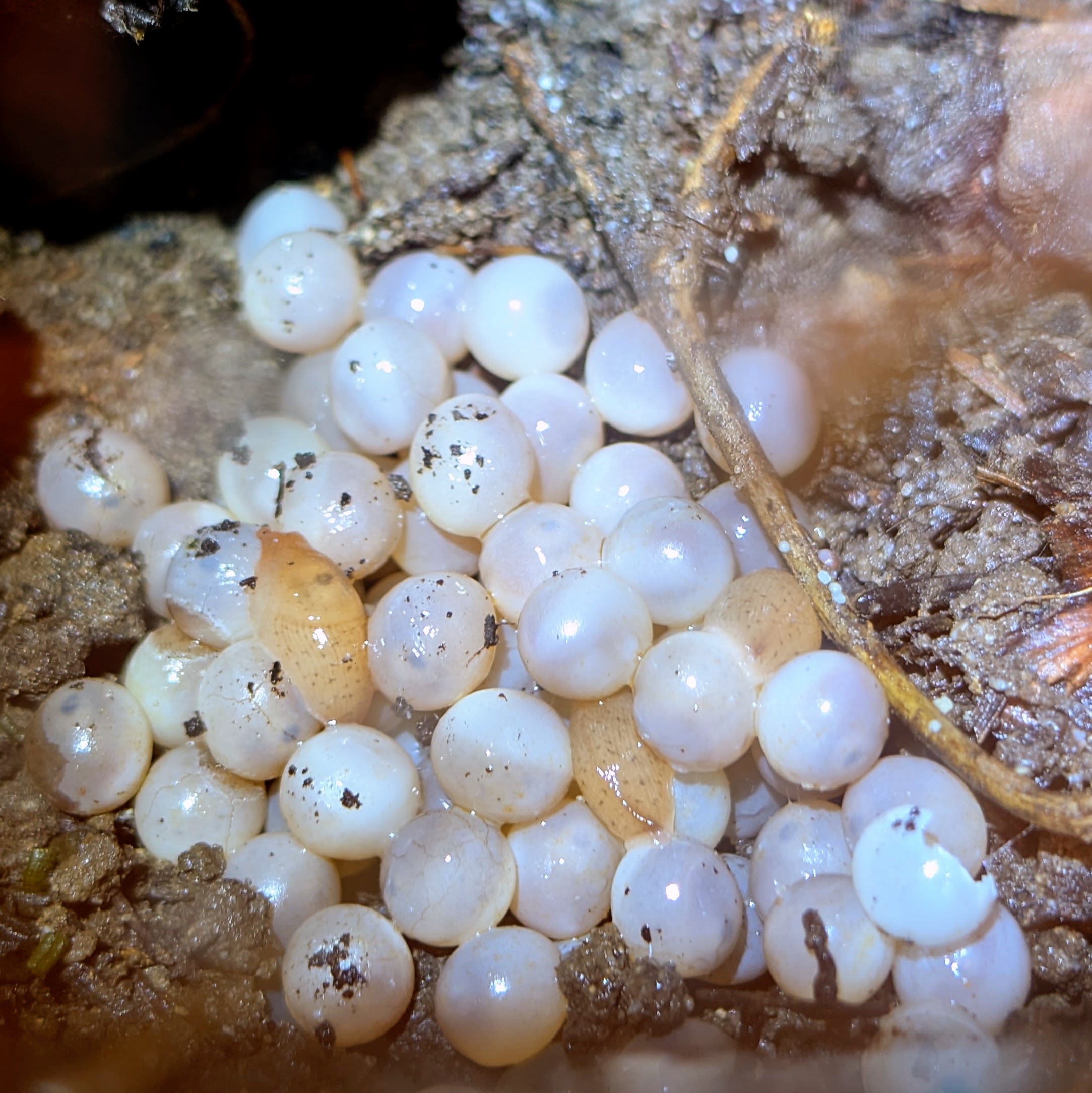
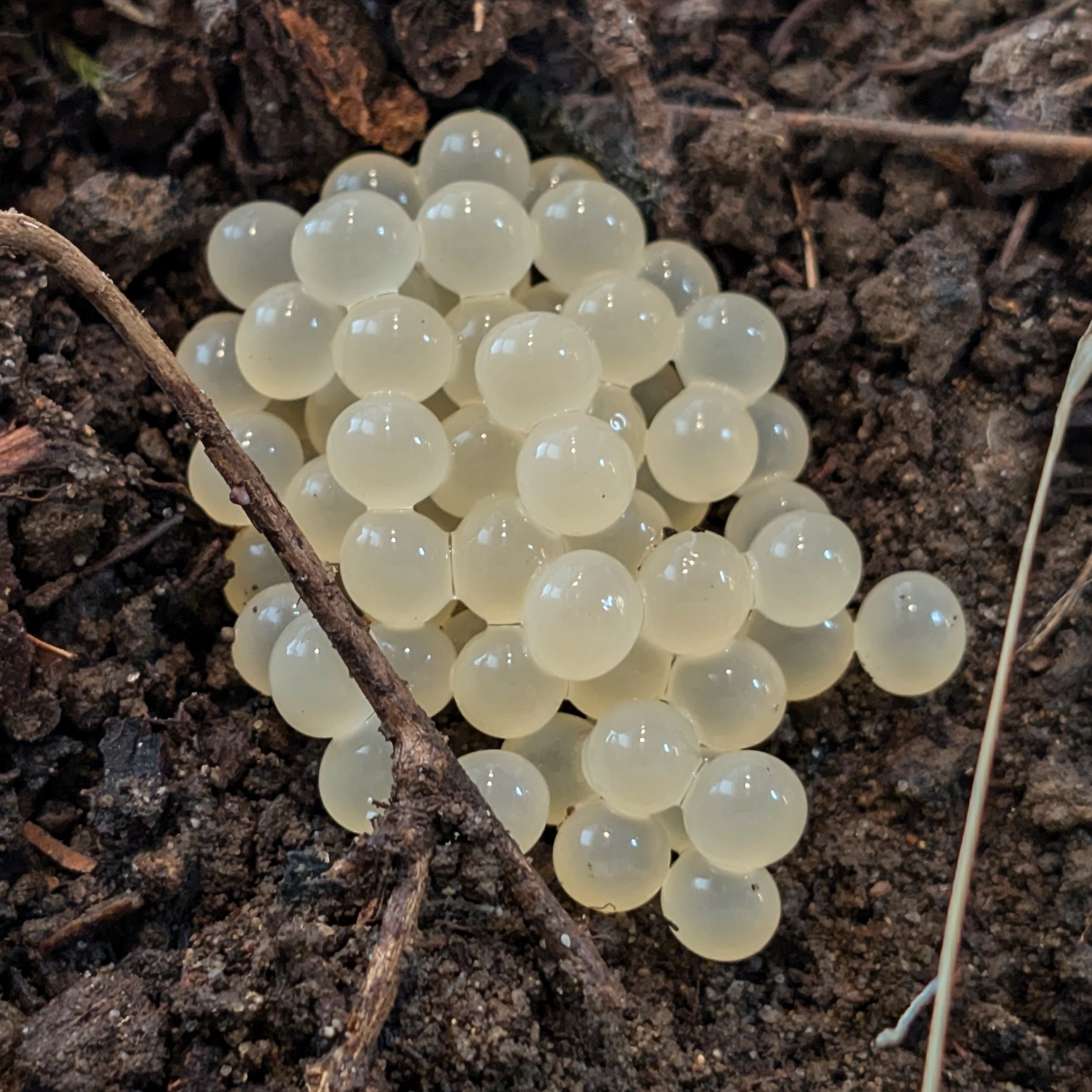
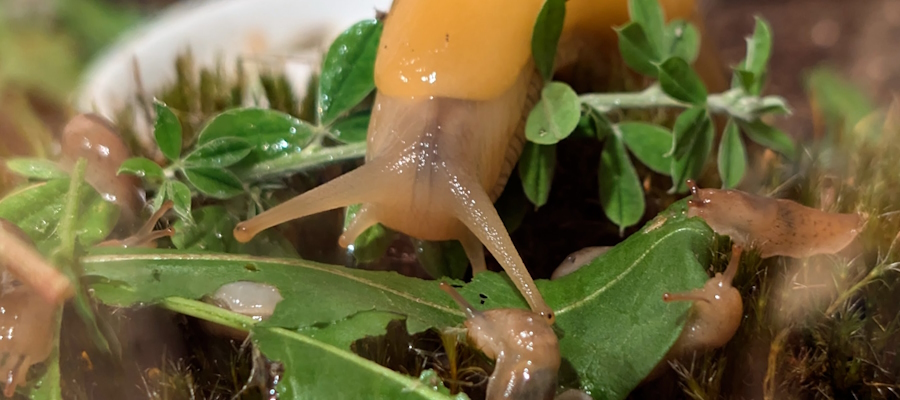
- Eggs may be laid at as young as 8 months old, and take ~6 weeks to hatch.
- The largest brood was 65 and a result of self-fertilization, with only one individual falling noticeably behind the others' growth.
Spot Morphology
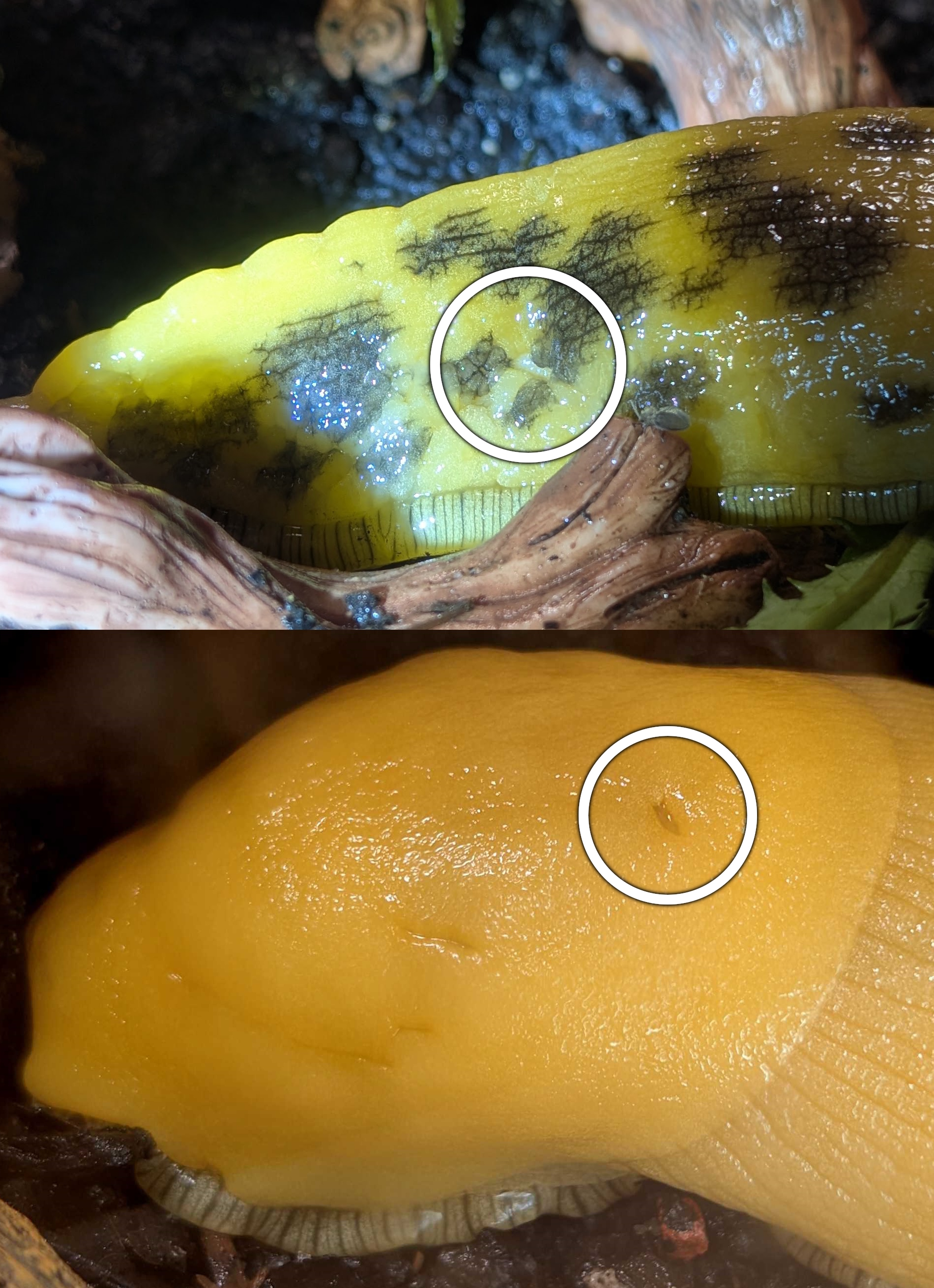
- Only the Button's Banana Slug and the closely related Pacific Banana Slug (A. columbianus) are known to occasionally have spots, which is determined by their alleles. Even when self-fertilized, the presence and composition of spots can vary dramatically within a single brood.
- Their tails exhibit small speckles until ~3 weeks of age, at which point the pigment begins to either fade away or become more defined as spots.
- With very rare exceptions, spotted adults feature a single spot on their mantle, which completes its development within the egg by ~1 month, and is usually so defined that it can even be seen through the eggshell when the fetus is suitably oriented. This is noteworthy, because its presence can predict whether an individual will develop tail spots, as it's not otherwise apparent until weeks after they've hatched.
- Mantle spots are situated directly above their internal shell, which is in turn visible through the mantle until ~2.5 months of age. The spot's location suggests that it may be a byproduct of shell development, which greatly depends upon tyrosinase — an enzyme that also happens to be the primary driver of melanin production. Shell production is in overdrive during the early stages of development, which would explain why a spot here forms so much earlier than those on the tail.
Additional media is available upon request.
See the site's Main Page for means of contact.
Successful Care
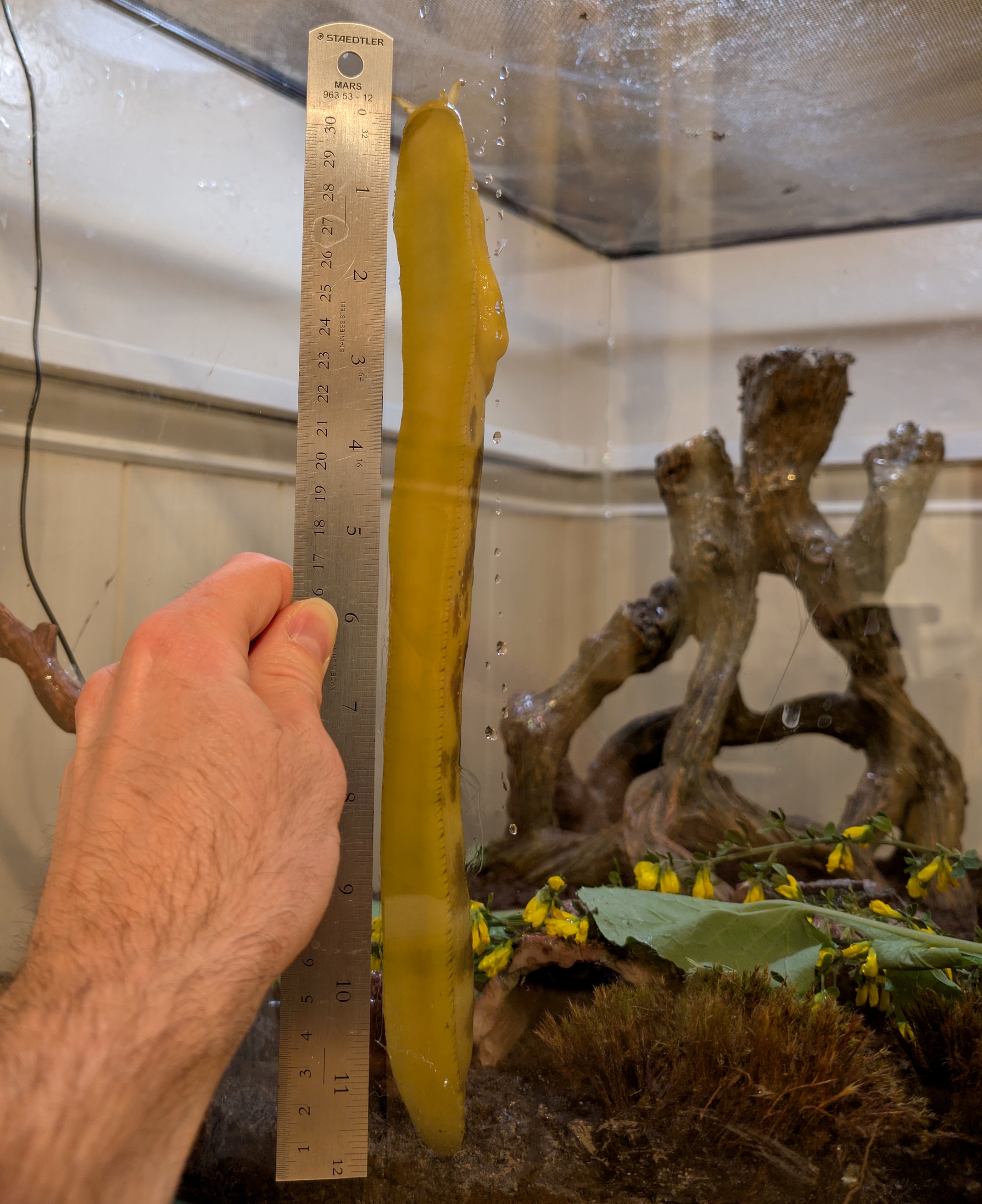
Meet Lil' Shrimp — my first Banana Slug. I adopted him at about an inch long, and over the course of 14 months watched him grow into a giant 12" (30cm) slug. It's thanks to him and his babies that I'd first learned much of the following.
Diet
Staple foods — containing vital nutrients.
Hydrate dry goods to avoid harmful expansion in the gut.
Climate
Temperature
The substrate's surface features a constant range of 55–65°F (13–18°C) by means of a height gradient and custom substrate cooler, while the enclosure's lid is ambient (~72°F or ~22°C in my case).
Hydration
I target a damp substrate and 85% RH. Due to the aforementioned temperature gradient, relative humidity follows an inverse gradient, so my measurement is taken near the bottom of the enclosure — where they spend most of their time.
Avoid directly spraying the slugs with water that greatly differs from their temperature; otherwise, the thermal shock will stress them. I store my spray bottle at ~60°F (15°C), but primarily rely on a fogger, where the smaller droplets equalize with the air so quickly that room-temperature water isn't a concern.
Enclosure
Size
32-Gal (120L), measuring 24"W x 18"D x 18"H (60 x 45 x 45cm). I've found this to be suitable for up to two adults, as upon most encounters, they engage in what often appears to be a stressful courtship. Height also doesn't seem to be as important as the horizontal dimensions.
Substrate
Consists of organic topsoil — meaning no fertilizer or pesticides. Gastropoid is a good source in the US.
To create the thermal gradient, I varied the height between 1–6" (2.5–15cm), with a roughly 70% bias to 1" (2.5cm).